Welding technology
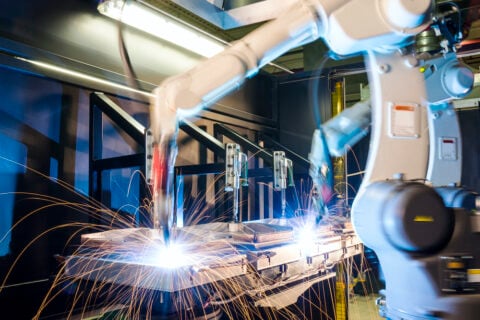
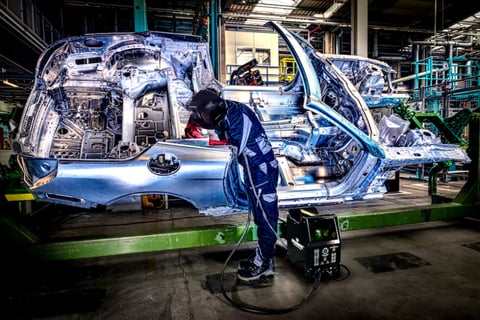
The future is here; welding is no longer a dark, dirty, hot trade. Increasingly, it is backed by advanced technology like robots, co-bots, welding cameras and augmented reality.
Rapid advancements in welding technology are improving productivity, quality and workplace safety, particularly in the areas of augmented reality, collaborative robots, and sophisticated monitoring cameras.
The welding industry in Australia is on the brink of a revolution, powered by the rapid advancements in technology. At the heart of this transformation are augmented reality, collaborative robots, and sophisticated monitoring cameras.
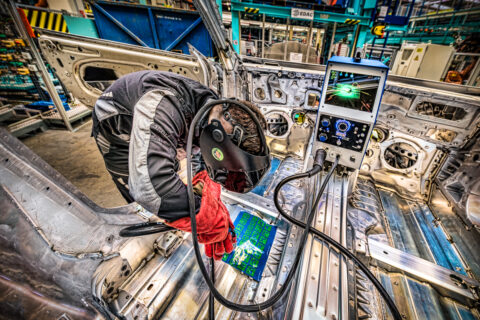
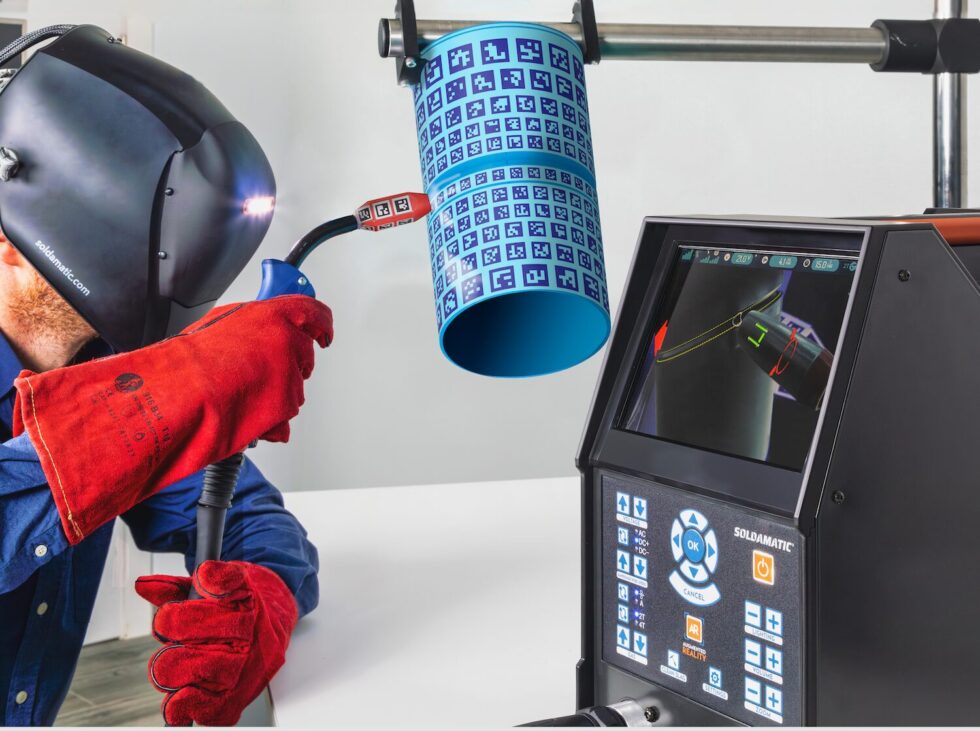
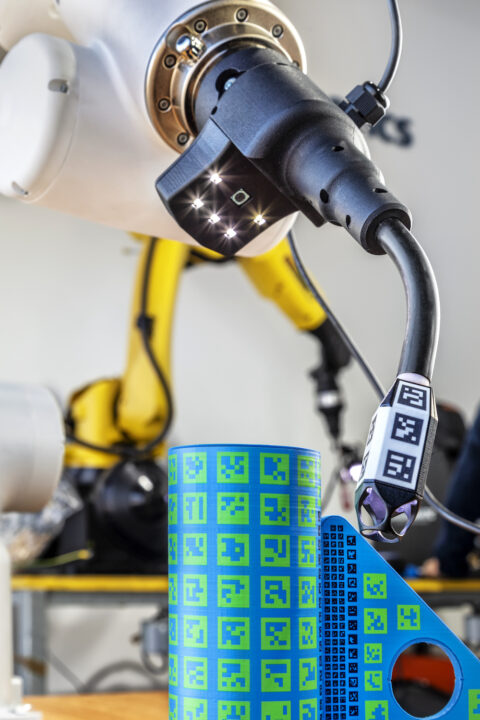
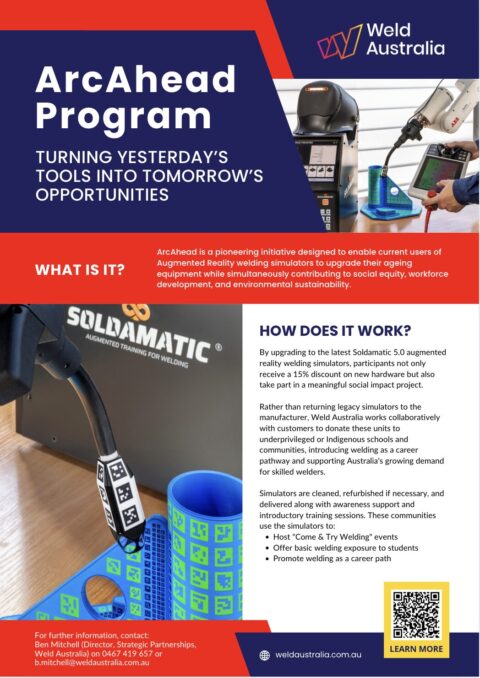
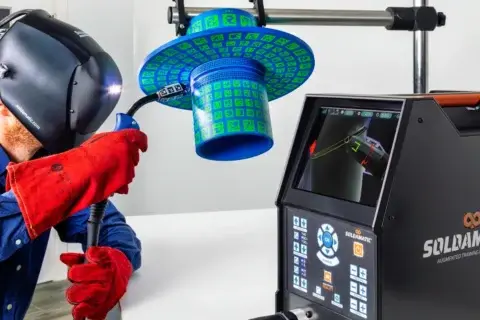
Augmented reality offers welders an enhanced visualisation, overlaying digital information onto the real world. This not only aids in precision but also provides real-time guidance and training, reducing errors and ensuring consistency across complex welding tasks.
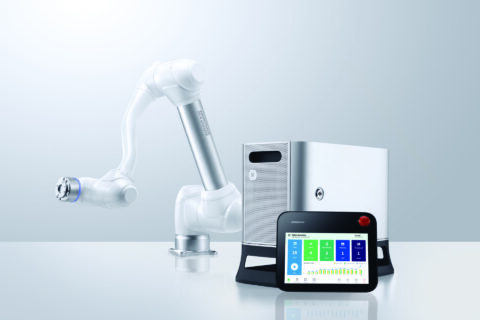
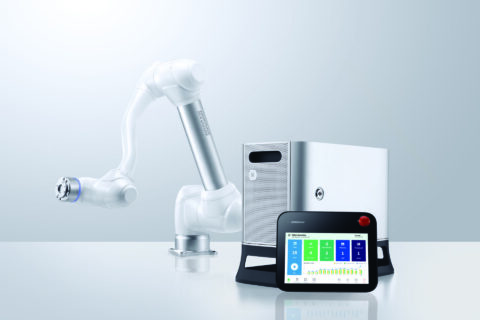
Unlike traditional robots that work separately from humans, cobots are designed to work alongside their human counterparts. They offer increased efficiency and accuracy, especially for repetitive tasks. This collaboration results in faster production rates without compromising on quality.
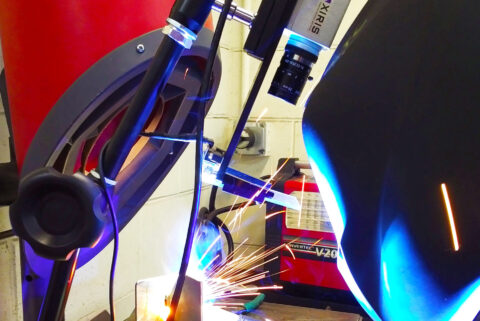
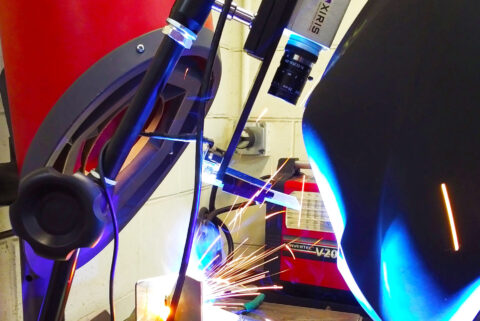
High-definition cameras provide detailed, close-up visuals of the welding process. By magnifying intricate sections and ensuring accurate joins, they significantly improve quality control. Moreover, the recorded footage can be used for training and quality assurance purposes.
For welders and fabrication business owners, these technologies are not just tools; they’re game-changers. Embracing them not only places businesses at the forefront of the industry but also guarantees a future of increased productivity, quality, and safety.
Doosan Collaborative Robots
Xiris Welding Cameras
ArcAhead Program
Want to know more?
For further information on advanced welding technology, contact:
- Soldamatic augmented reality welding simulators: soldamatic@weldaustralia.com.au
- Collaborative robots: Cornelis van Niekerk on 0409 609 031 or c.vanniekerk@weldaustralia.com.au
- Xiris welding cameras: Michelle Tagliapietra on 0437 106 726 or m.tagliapietra@weldaustralia.com.au
- ArcAhead program: Ben Mitchell on 0467 419 657 or b.mitchell@weldaustralia.com.au
Soldamatic
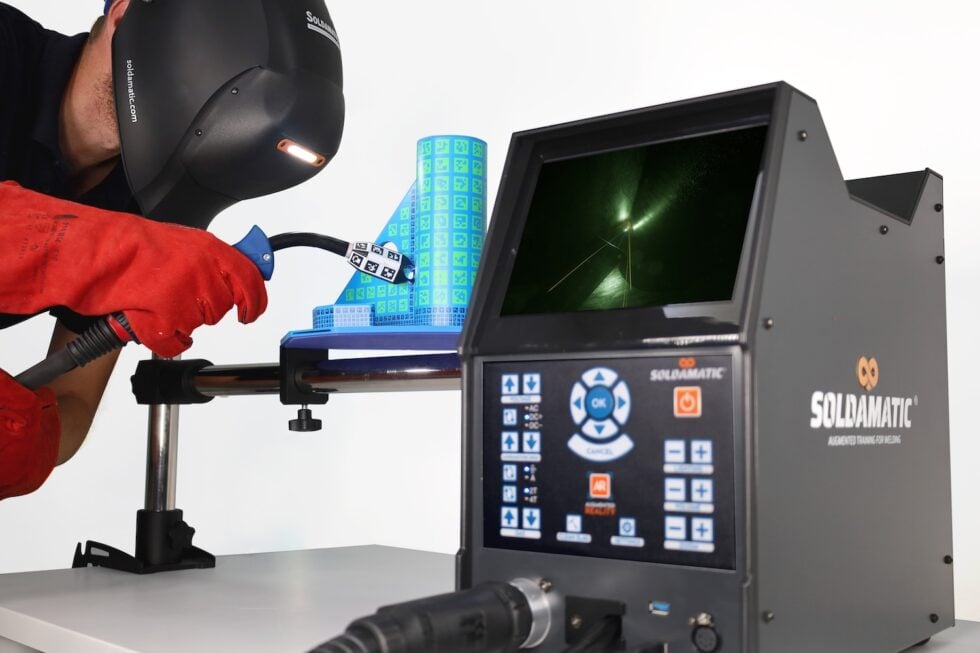
Soldamatic Augmented Reality Welding Simulators
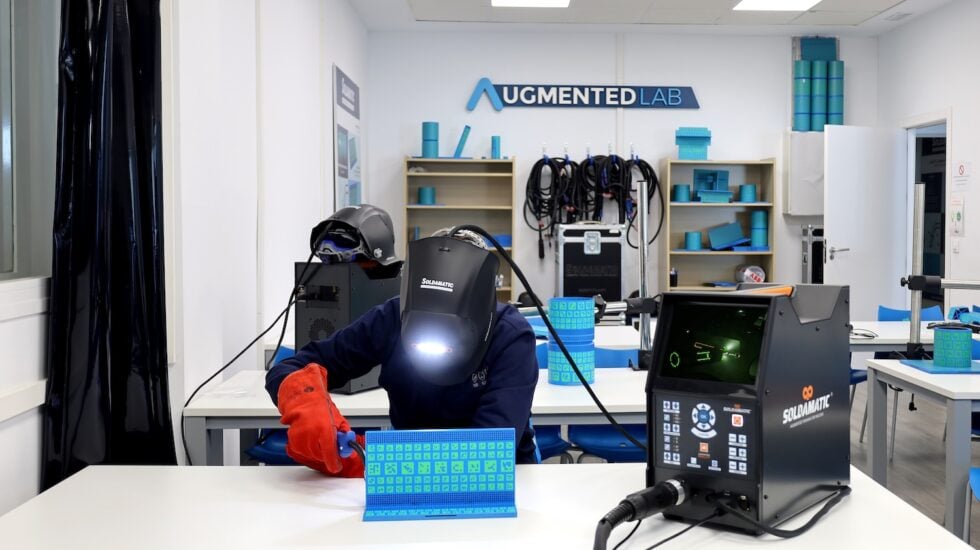
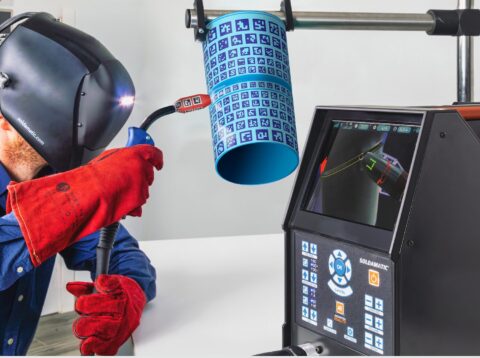
Soldamatic is a flexible welding training solution that provides trainers with the tools to manage courses with numerous learners, regardless of their level of knowledge and pace of learning.
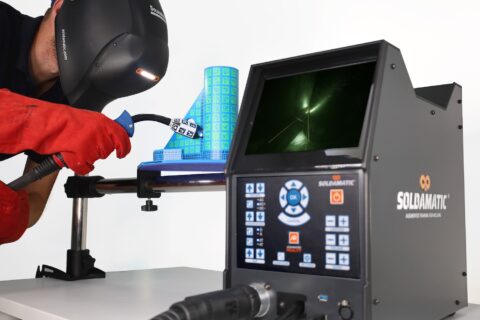
Created by Seaberry, Soldamatic is a proven, effective and patented state-of-the-art augmented reality based training solution with HyperReal SIM an exclusive proprietary feature that provides the most realistic welding simulator training experience apart from actual welding.
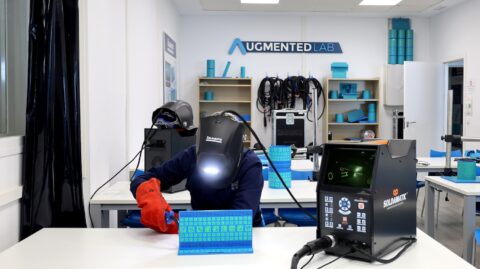
Augmented and virtual reality training systems are student-focused, allowing individual students to progress at their own pace. Welding apprentices learn and understand welding procedures and techniques through a more interactive training method, gaining hands-on experience in a controlled, safe environment.

Augmented reality transforms training from boring theory and text books into high-quality interactive experiences that capture the imagination.
With zero risks involved, apprentices can respond to realistic scenarios without pressure or fear of injury. Augmented and virtual reality training is enabling future welders to acquire the skills and the self-confidence they need before moving into real-world workshops.
Why Use Soldamatics for Welder Training?
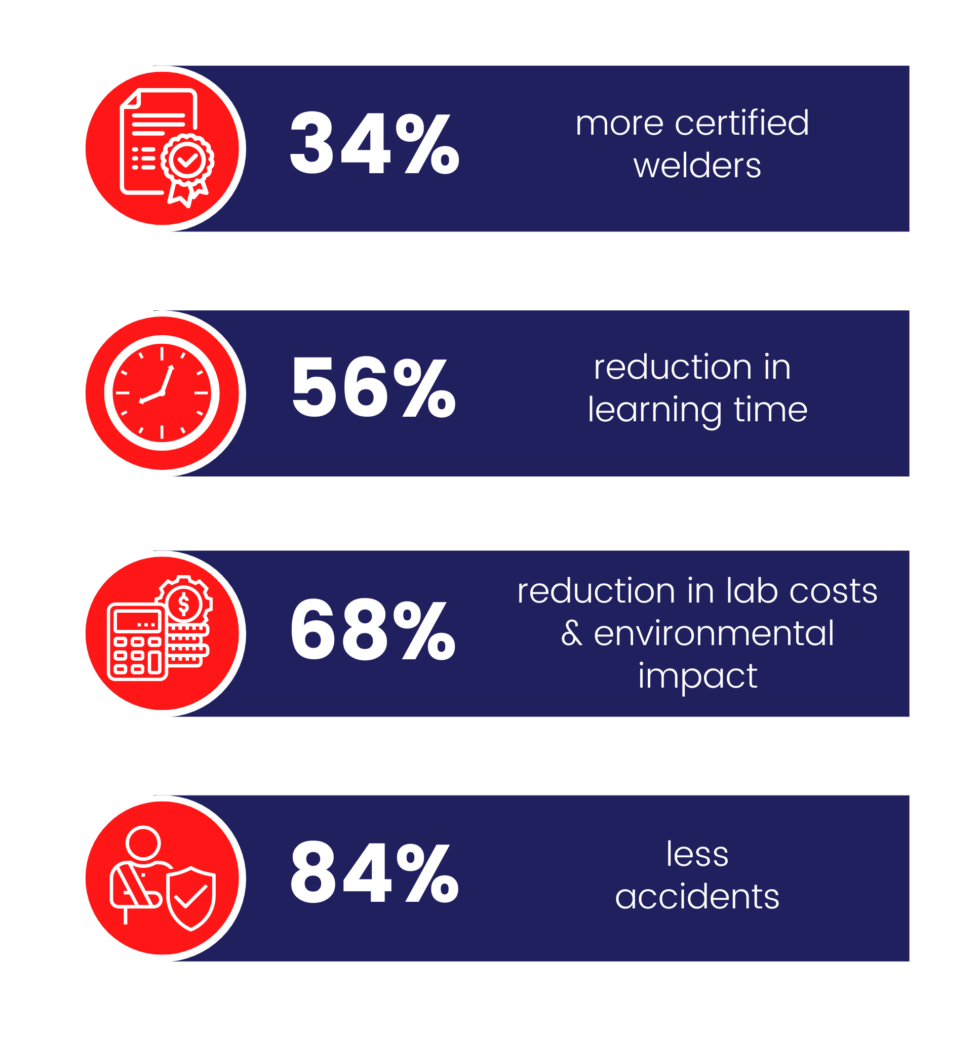
Soldamatic conducted tests comparing their augmented reality technology to traditional welding training. The results demonstrated that 34% more welders were certified in 56% less time, saving up to 68% on the overall cost of welder training. In addition, Soldamatic increases the time on arc by three to five times, and enables training institutes to educate four times more students.
The new paradigm in vocational, technical and industrial training, augmented and virtual reality training technologies are proven to be efficient and environmentally sustainable, offering significantly reduced CO2 emissions when compared to traditional welding training and slashing consumable usage. These systems allow training centres and industry to save costs and time whilst training professional welders.

Soldamatic Version 6
The Soldamatic 2026 (Version 6) represents a substantial upgrade over the Soldamatic Version 5, delivering enhanced visuals, more versatile training options, better real world preparation and improved feedback and analysis.
More Versatile Training Options: Suitable for beginners and advanced welding courses. Stronger foundation for building structured curricula, certification ready modules, or multi stage training series.
Better Real World Preparation: More accurate and meaningful training outcomes including tests on weld integrity, not just surface appearance, better prepares students for real-world welding and certification processes.
Stronger Camera System: The fixed-lens camera and reinforced protective frame provide a more durable, impact-resistant module. Drop testing confirms significantly improved robustness.
More Reliable Hose Assembly: Reinforced cabling and reduced torsion points improve mechanical resilience. Robotic cycle testing shows all electronics remain fully functional over extended use.


Higher Production Quality: Improved assembly tolerances and upgraded connectors create more consistent, low-stress builds. These changes reduce the likelihood of hardware faults.
Photorealistic Visual Rendering: PVR shading and lighting deliver metal surfaces, arcs, and puddles that closely resemble real welding conditions. This increases immersion and visual accuracy.
Enhanced TIG (GTAW) Simulation: More accurate arc behaviour, bead geometry, and puddle detail create a training experience closer to real TIG welding.
Realistic Torch-Tip Camera View: New torches with integrated tip cameras give trainees a true welding viewpoint, improving precision during complex tasks.
Real-Time Guidance and Analysis Tools: Live on-screen feedback helps students correct technique during the weld. Advanced tools—including cross-sections, bend tests, 3D views, and replay—support deeper evaluation.
Improved Fault Detection and UI: More accurate defect recognition and clearer interface visuals help instructors and students identify issues quickly and confidently.
Soldamatics in action
Advanced Welder Training Centres
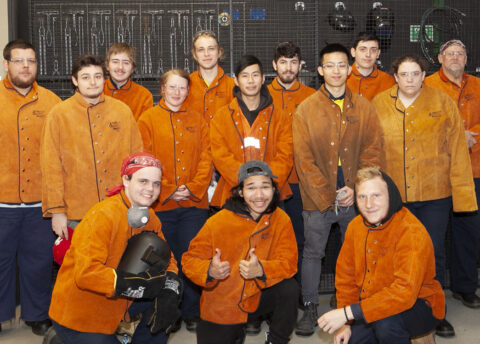
Weld Australia has worked with partners around the country to establish Advanced Welder Training Centres (AWTCs). Using the state-of-the-art Soldamatic augmented reality welding simulators, the training delivered at the AWTCs quickly qualifies welders to the only industry Standard in the world that is accepted in both Europe and America: ISO 9606-1 Qualification testing of welders – Fusion welding.
Advanced Manufacturing Schools Outreach Program
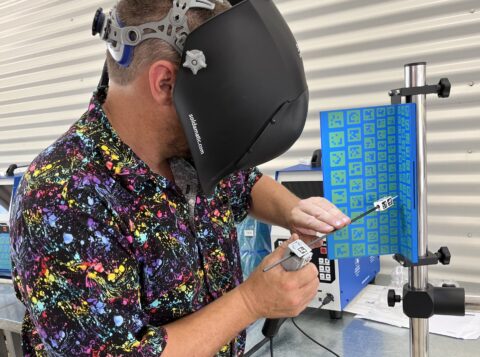
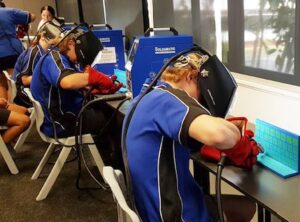
The Advanced Manufacturing Schools Outreach Program is encouraging kids in secondary schools across New South Wales to explore a meaningful career in the trades. The Program uses Soldamatic augmented reality welding simulators to gamify the learning experience, giving Year 9 students an understanding of welding in a completely safe and controlled environment.
Welder Training at HM Prison Langi Kal Kal
Given the proven success of VET programs for prisoner rehabilitation, in 2022, Corrections Victoria expanded the VET Centre of Excellence model to deliver Fusion Welding to ISO 9606 certification standard at HM Prison Langi Kal Kal. Federation University delivers the training program using Soldamatic welding simulators with the support of Weld Australia and on-site prison industry staff.
Long-Term Unemployed Industry Program
In partnership with Workskil Australia and TAFE SA, Weld Australia delivered an innovative new training program for a group of long-term unemployed people. With little to no prior welding experience, the students used augmented reality welding simulators to learn the skills and techniques needed to perform welds.
Exhibitions and Career Expos
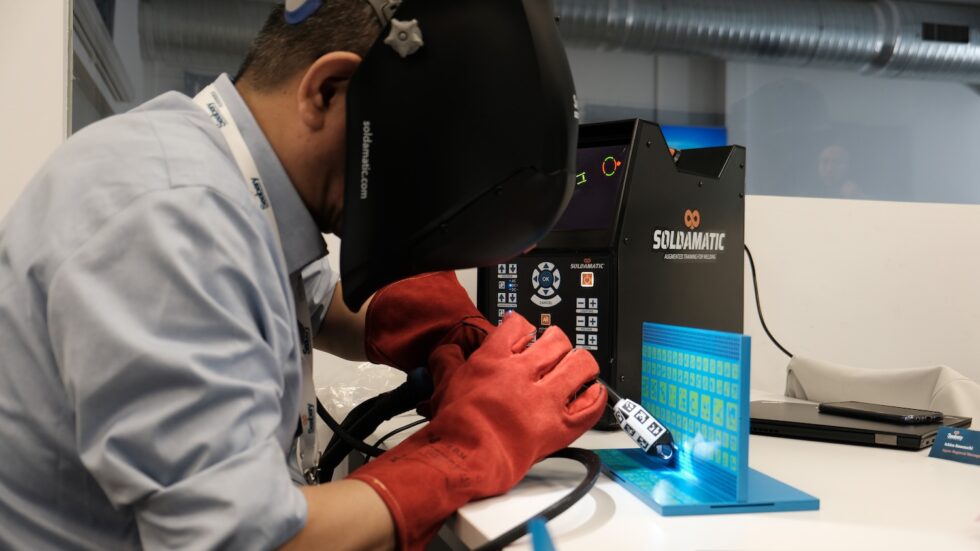
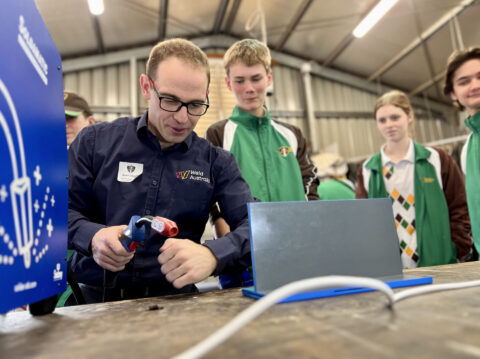
Weld Australia regularly attends industry exhibitions, career expos, and Trade A Trade demonstrations around the country. These events give school children the opportunity to try their hand at welding in a completely safe environment and learn more about a career in Australia’s welding industry. The Soldamatic simulators always prove to be very popular, with crowds of people waiting in line for their turn to try their hand at welding.
Doosan
Doosan Collaborative Robots
Cobots are specifically designed to share the work space with human beings, making automation easier for businesses of all sizes, particularly SMEs.
Cobots are generally versatile, lightweight, require relatively little space, and are much easier to program than their industrial counterparts. They can also capture large volumes of data that can be deployed in areas such as predictive maintenance. Just some of the benefits delivered by cobots include:
- Improved productivity and profitability
- Superior quality and repeatability
- Growth in domestic and export markets for SMEs
- Safer working conditions
- Greater job satisfaction


Integrated Training with Soldamatic Simulators
When combined with augmented reality training technologies like the Soldamatic welding simulators, cobots offer an innovative solution for upskilling the next generation of welders—merging automation with immersive, hands-on learning.
Weld Australia is actively demonstrating the power of combining Doosan cobots with Soldamatic augmented reality welding simulators. This integration creates an immersive and safe training environment that reflects real-world welding scenarios—without the need for physical materials or consumables.
By simulating welding tasks with precision and allowing students to work directly alongside a cobot, training providers can enhance safety, improve engagement, and dramatically reduce material costs. This approach also aligns with modern manufacturing’s demand for digitally fluent, automation-ready welding professionals.
This is more than just technology—it’s a complete solution for workforce development in welding and fabrication.
Doosan Robotics is an industry leader of the collaborative robot (cobot) market, bringing forward unrivaled automation solutions. Founded in 2015, Doosan Robotics addresses parent company Doosan Group’s efforts to redefine new growth engine and core business areas. After three years of research and development, the company successfully developed a range of four cobot models. Doosan Robotics offers the world’s most diversified lineup of robots with a load capacity of 5 to 25 kg and working radius of 900 to 1700mm. Their product ranges includes: High-power H-Series, Masterpiece M-Series, Agile A-Series
Main Applications
Doosan cobots be applied in a wide range of processes and tailored to meet customers’ needs. Some of the manufacturing processes that currently integrate Doosan robots include, but are not limited to: pick and place, press forming, polishing and deburring, assembly, gluing and bonding, air blowing, packaging and palletising, inspection, welding, plastic injection assistance, and heavy material handling.
Xiris
Xiris Welding Cameras
Xiris weld cameras help manufacturers detect, recognise, and interpret quality defects in manufactured goods.
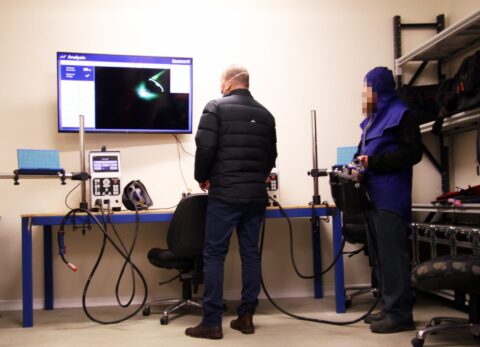
Modern compact camera technology and specialty software are offering inspectors and welders an unprecedented ability to view the welding process in-detail, and in real-time. Recent advances in advanced image sensor design and supporting electronics allow best-in-class cameras to provide high contrast images without saturation of the brightest portion of the image, exposing the details of the electrode, melt pool, seam and surroundings.
The Xiris weld camera eliminates pixel saturation that previously masked the weld process details. The result is a clear definition of the weld arc as well as making its darker environment clearly visible, allowing for improved productivity of the welding process.
Xiris weld cameras provide the clearest views of the brightest features of a weld arc while still being able to see the surrounding darker background areas such as the weld pool and weld seam and are suitable for a wide range of applications.

Why Invest in Weld Cameras?
Inspectors and welders can view images while welding is in progress, allowing the detection of defects and identification of problems with welds and welder technique early on. This leads to faster corrections, less scrap, and less time lost due to repairs. Weld cameras are particularly helpful in identifying porosity and inclusions.
By integrating weld cameras with the process, an operator is able to obtain a clear, bright view of the torch and seam, no matter the setup. Any operator is then able to use the weld camera to consistently achieve alignment.
Real time monitoring can result in less disruptions to the welding process to undertake quality checks and verification, leading to higher productivity. Combined with nondestructive examination methods, inspectors are also less dependent on destroying a selection of completed welds to test for quality.
Inspectors and welders can record footage of the arc and weld pool for more detailed post-weld analysis. Recordings of live welds make invaluable teaching tools, as instructors can show easy-to-follow footage of proper arc formation or correct electrode placement.
There is a range of benefits associated with workforce health and safety. For instance, removing a welder or an inspector from hard-to-access, high, or otherwise constrained work environments, improves site safety, and reduces fatigue and work stoppages, improving overall productivity. Weld cameras also remove operators from close exposure to possibly carcinogenic fumes.
Weld Australia is partnering with Xiris Automation to bring their weld cameras to Australia. Xiris helps manufacturers detect, recognise, and interpret quality defects in manufactured goods. For further information, visit: xiris.com.
ArcAhead Program
Turning yesterday’s tools into tomorrow’s opportunities
ArcAhead is a pioneering initiative designed to enable current users of augmented reality welding simulators to upgrade their ageing equipment while simultaneously contributing to social equity, workforce development, and environmental sustainability.
How Does It Work?
By upgrading to the latest Soldamatic 6.0 augmented reality welding simulators, participants not only receive a 15% discount on new hardware but also take part in a meaningful social impact project.
Rather than returning legacy simulators to the manufacturer, Weld Australia works collaboratively with customers to donate these units to underprivileged or Indigenous schools and communities, introducing welding as a career pathway and supporting Australia’s growing demand for skilled welders.
Simulators are cleaned, refurbished if necessary, and delivered along with awareness support and introductory training sessions. These communities use the simulators to:
- Host “Come & Try Welding” events
- Offer basic welding exposure to students
- Promote welding as a career path
For further information, please contact: Ben Mitchell (Director, Strategic Partnerships, Weld Australia) on 0467 419 657 or b.mitchell@weldaustralia.com.au.

Why Upgrade?
Upgrading ensures your training offering remains best-in-class and future-proofed against changing industry needs.
Plus, participants not only receive a 15% discount on new hardware but also make a meaningful social impact.
The Soldamatic 2026 (Version 6) represents a substantial upgrade over the Soldamatic Version 5, delivering enhanced visuals, more versatile training options, better real world preparation and improved feedback and analysis.
More Versatile Training Options: Suitable for beginners and advanced welding courses. Stronger foundation for building structured curricula, certification ready modules, or multi stage training series.
Better Real World Preparation: More accurate and meaningful training outcomes including tests on weld integrity, not just surface appearance, better prepares students for real-world welding and certification processes.


Stronger Camera System: The fixed-lens camera and reinforced protective frame provide a more durable, impact-resistant module. Drop testing confirms significantly improved robustness.
More Reliable Hose Assembly: Reinforced cabling and reduced torsion points improve mechanical resilience. Robotic cycle testing shows all electronics remain fully functional over extended use.
Higher Production Quality: Improved assembly tolerances and upgraded connectors create more consistent, low-stress builds. These changes reduce the likelihood of hardware faults.
Photorealistic Visual Rendering: PVR shading and lighting deliver metal surfaces, arcs, and puddles that closely resemble real welding conditions. This increases immersion and visual accuracy.
Enhanced TIG (GTAW) Simulation: More accurate arc behaviour, bead geometry, and puddle detail create a training experience closer to real TIG welding.
Realistic Torch-Tip Camera View: New torches with integrated tip cameras give trainees a true welding viewpoint, improving precision during complex tasks.
Real-Time Guidance and Analysis Tools: Live on-screen feedback helps students correct technique during the weld. Advanced tools—including cross-sections, bend tests, 3D views, and replay—support deeper evaluation.
Improved Fault Detection and UI: More accurate defect recognition and clearer interface visuals help instructors and students identify issues quickly and confidently.
Program Workflow

Step 1: Eligibility Assessment: Weld Australia will review your existing simulator fleet to confirm model and condition eligibility.
Step 2: Trade-In Proposal: You will receive a customised quote for your upgrade, including the 15% discount.
Step 3: Community Nomination: We’ll collaborate with you to nominate a community or school to receive your legacy simulators.
Step 4: Equipment Handover: Legacy units are collected, assessed, and prepared for reuse.
Step 5: Donation & Support: Simulators are delivered to the community along with basic orientation materials and optional on-site support or demonstration days.